
Fermented through time – Pachinko by Min Jin Lee
Min Jin Lee’s 2017 epic novel Pachinko is a multi-generational saga following a Korean family from 1910 through 1989 as they migrate to Japan and navigate displacement, identity, and survival.
Key Historical Context
- Japanese Occupation of Korea (1910–1945): The story opens during Japan’s formal annexation of Korea. During this period, Korean land, culture, and language were suppressed, and millions of Koreans moved to Japan—some voluntarily seeking economic relief, but many through forced labor.
- The “Zainichi” Korean Community: Koreans living in Japan during this era are known as Zainichi. Despite living in Japan for generations, born and raised there, many were denied Japanese citizenship, faced deep social segregation, and held legal status as foreign residents.
- The Division of Korea (1945–1953): After World War II and the Korean War, Korea split into North and South. Zainichi Koreans were forced to declare allegiance to either the North-affiliated (Chongryon) or South-affiliated (Mindan) organizations in Japan, deeply splitting the diaspora community politically and socially.
The Symbolism of Pachinko
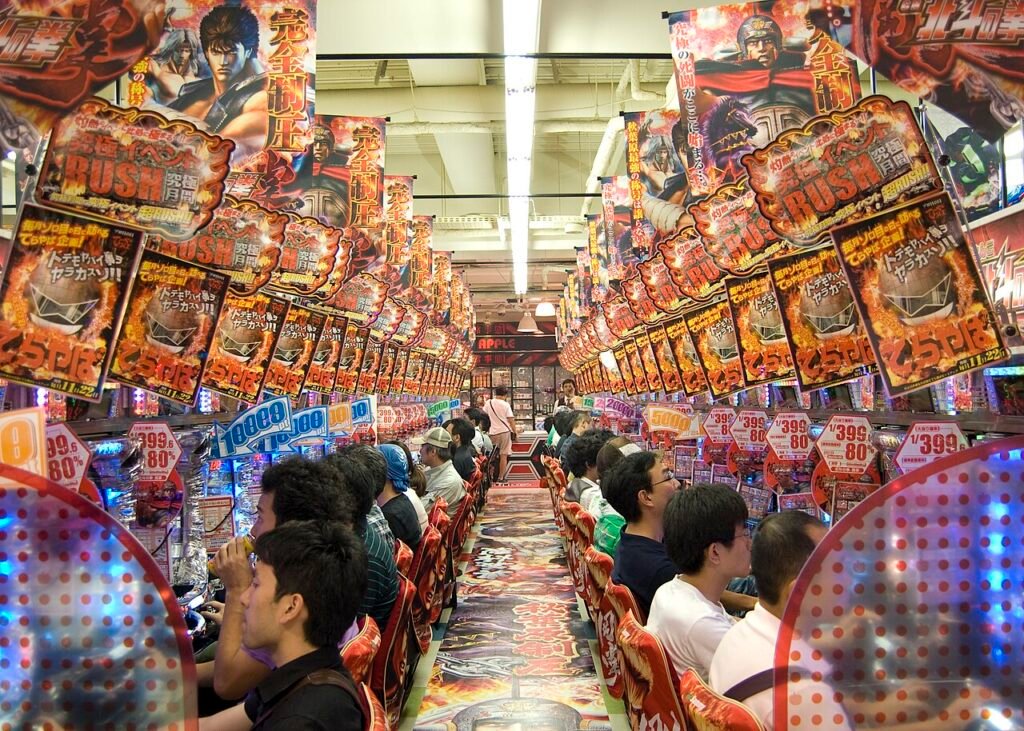
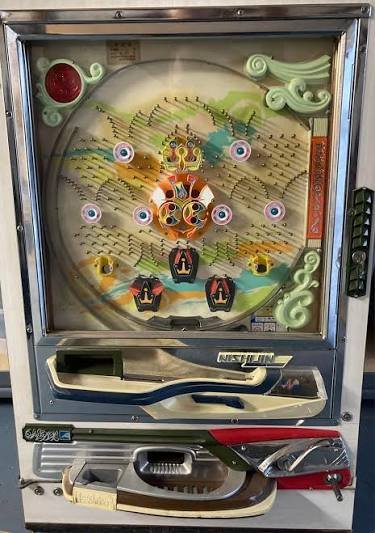
Pachinko is a mechanical arcade game in Japan, similar to a vertical pinball machine used primarily for gambling. Because gambling for cash was illegal in Japan, pachinko parlors operated in legal gray zones.
- The Industry Connection: Historically, pachinko parlors were one of the few lucrative business sectors open to ethnic Koreans, who were excluded from mainstream corporate jobs and government positions.
- The Metaphor: In the book, pachinko serves as a central metaphor for life as a marginalized minority: the game is rigged, the odds are stacked against the player, yet individuals keep playing, hoping for survival and small wins.
Author & Writing Style Context
Pachinko was almost 30 years in the making — and, remarkably, Min Jin Lee essentially wrote the novel twice.
The idea first took hold in 1989, when Lee was studying history at Yale and attended a talk by an American missionary working with ethnic Koreans in Japan. He told the heartbreaking story of a Korean-Japanese schoolboy who had been relentlessly bullied because of his ethnicity. Lee couldn’t stop thinking about him, and the story planted the seed for the novel she would eventually publish nearly three decades later.
Her first completed version, written between roughly 1996 and 2003 and originally called Motherland, was very different. Solomon was much closer to the centre of the story, and Sunja was not yet the great matriarch around whom the finished novel revolves. Lee eventually decided that manuscript simply didn’t work and abandoned almost all of it.
Everything changed when her family moved to Tokyo in 2007. Lee began interviewing Korean-Japanese families, visiting pachinko parlours and doing extensive field research. Those conversations made her realise that archival history alone couldn’t capture the complexity, humour, contradictions and resilience of ordinary people’s lives. She threw out most of the old manuscript and began again.
She even played pachinko as part of her research and spent time behind the scenes in pachinko parlours learning how the businesses operated.
That research also helped shift the novel away from being primarily an argument about discrimination and towards being a story about people. Rather than simply telling us that history was unjust, Lee allows us to experience that history through marriages, pregnancies, food, work, shame, ambition, love and the tiny choices families make to survive.
Stylistically, Pachinko feels deliberately old-fashioned. Lee uses an omniscient, largely chronological narrative reminiscent of the great 19th-century family novels: the perspective moves easily from one character to another while decades pass almost quietly around them. The result feels less like following one protagonist and more like watching history wash across an entire family.
Should You Watch the Series Too?
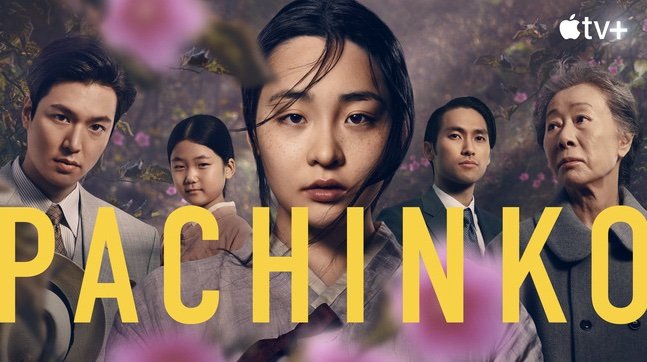
Absolutely. If you loved the book, I genuinely recommend watching the Apple TV+ series as well. And if you discovered Pachinko through the series first, the novel is still very much worth reading.
This is one of those rare adaptations where the changes don’t feel like they diminish the original story. In many ways, the series actually adds another layer of depth. It expands characters who remain more mysterious in the novel, gives greater historical context to certain events, and uses its parallel timelines to show the consequences of one generation’s choices on the next.
The book and the series tell essentially the same family story, but they experience it very differently. The novel gives you the slow, sweeping passage of almost an entire century; the television series lets you see generations almost speaking to one another across time.
⚠️ SPOILER WARNING: The section below compares the novel with the Apple TV+ adaptation and discusses major plot developments in both.
Book vs TV Series: What Changed?
1. Non-Linear vs. Strictly Chronological Structure
- The Book: Min Jin Lee tells the story in a traditional, strictly linear chronology starting in 1910 Busan with Sunja’s parents and moving forward step-by-step through four generations until 1989.
- The Series: The show uses a dual intercut timeline. It places young Sunja’s journey in early 20th-century Korea/Japan directly parallel to her grandson Solomon’s high-stakes corporate life in 1989 Tokyo. This visual juxtaposition directly highlights generational contrast—showing what Sunja sacrificed so Solomon could stand in modern boardrooms.
2. Character Depth & Backstories Expanded
- Koh Hansu’s Backstory: In the novel, Hansu’s background is shared through dialogue and context, keeping him somewhat enigmatic. The series devotes an entire standalone episode (Episode 7 in Season 1) to his backstory, depicting his survival during the devastating 1923 Great Kantō Earthquake and the anti-Korean violence that followed, giving him a more sympathetic, complex origin.
- Isak’s Motivations: In the book, Sunja’s husband Isak is arrested primarily due to religious persecution (a church boy mouths The Lord’s Prayer instead of the Shinto pledge). In the show, Isak is given a more active political arc, becoming involved in underground anti-Japanese socialist/worker resistance groups.
- Solomon’s Agency and Backstory: In the book, Solomon is fired from his firm after a real estate transaction falls through due to external circumstances involving a death. In the show, Solomon himself intentionally sabotages his own career-defining deal after an emotional realization, giving him more direct narrative agency. His teenage backstory in Japan (including shoplifting with Hana) is also expanded.
3. Added Scenes, Interactions, and Characters
- Hansu and Isak Meeting: In the novel, Sunja’s past (Hansu) and present (Isak) never cross paths directly. The series invents a tense confrontation between Hansu and Isak at a tailor shop.
- Sunja’s Return to Korea: The series features emotional scenes of an elderly Sunja returning to her hometown in South Korea to spread ashes and reunite with old acquaintances—a trip that does not take place in the book.
4. Documentary-Style Additions
- Unlike the pure historical fiction of the novel, the TV series integrates documentary elements. Season 1 ends with real-life documentary interviews of elderly Zainichi Korean women in their 90s, grounding the fictional narrative in historical testimony.
…and then THAT ENDING
Because the novel covers eight decades chronologically while the Apple TV+ adaptation restructures the story into parallel timelines (and spans multiple seasons), comparing their “endings” depends on looking at the novel’s conclusion versus the TV series’ seasonal structure.
The Novel’s Final Ending (1989)
Min Jin Lee’s novel ends on a quiet, bittersweet, and reflective note after moving through four full generations.
- Tragic Loss: Sunja’s eldest son, Noa, who spent his life hiding his Korean heritage after discovering he was Koh Hansu’s biological son, ultimately commits suicide years later when Sunja accidentally tracks him down.
- Solomon’s Path: Sunja’s grandson Solomon is pushed out of the Western corporate banking world due to prejudice and systemic barriers. Instead of fighting corporate Japan, he embraces reality and takes over his father’s Pachinko business, finding dignity and financial independence on his own terms.
- The Final Scene: The novel ends with an elderly Sunja visiting the grave of her late husband, Isak. The cemetery worker tells her that a man (revealed to be Koh Hansu) used to visit Isak’s grave regularly to make sure it was maintained. Sunja realizes how intertwined their lives remained and reflects on the survival, enduring love, and heavy toll her family experienced over nearly a century.
The TV Adaptation’s Narrative Ending Strategy
Because the show is designed as a multi-season series, it does not reach the novel’s final 1989 resolution all at once. Instead, it uses seasonal climaxes that depart significantly from the book’s specific events:
Season 1 Finale Climax
- 1930s Timeline: Isak is arrested by the Japanese police. Unlike the book (where he is arrested for his quiet Christian faith), the show portrays him as an active underground political organizer. Left with no income, Sunja takes her fate into her own hands by selling homemade kimchi in the open market for the first time—marking her transformation into the family’s provider.
- 1989 Timeline: Solomon intentional sabotages his own career-defining Tokyo land deal after having an emotional epiphany about the elderly Korean landowner. This is a complete divergence from the book, where he is framed/fired due to external circumstances rather than making a conscious choice.
- Sunja’s Homeland Visit: Season 1 ends with modern-day elderly Sunja traveling back to Busan, Korea, to scatter ashes and visit her old home—a emotional sequence created specifically for the show that never happens in the book.
- Documentary Outro: The finale closes with real documentary footage and interviews of surviving 90-year-old Zainichi Korean women, bringing the fictional story into real-world history.
Season 2 Developments & Divergences
- As the series moves into WWII and the post-war era, it shifts focus onto Noa’s youth, the bombing of Nagasaki, and Solomon’s venture into the pachinko world.
- The TV show accelerates and expands side character fates—such as giving sister-in-law Kyunghee a heightened romantic storyline with Changho, and framing Isak’s eventual return/death with far more political drama than the novel’s somber, illness-driven sequence.
Key Summary of the Difference
While the book ends as a quiet, complete retrospective on a family’s full 80-year cycle of sacrifice, survival, and identity, the TV series constructs dramatic, character-driven turning points at the end of each season, emphasizing personal agency and active resistance over the book’s passive historical endurance.
So which one did I like best?
I loved both! It really speaks to how special the story is that both formats hit so hard in completely different ways.
Min Jin Lee’s novel has that incredible, classic literary sweep—it feels like a grand Russian or Victorian novel, where you just watch time silently wash over a family, leaving you with that heavy, reflective ache at the end.
Then Soo Hugh and the TV production team took that exact same soul and translated it into pure cinematic poetry. Changing the structure to jump between 1930s Sunja and 1980s Solomon was a masterstroke; seeing her toil in the mud right next to him walking into a sleek Tokyo skyscraper highlights the cost of that legacy in a way that only visual media can pull off. Plus, Yuh-Jung Youn (elderly Sunja) and Min-ha Kim (young Sunja) gave performances for the ages, and that opening title sequence dance is pure joy.
Do you find yourself leaning more toward Sunja’s chapter of the story in the early 1900s, or Solomon’s high-stakes 1980s corporate arc?